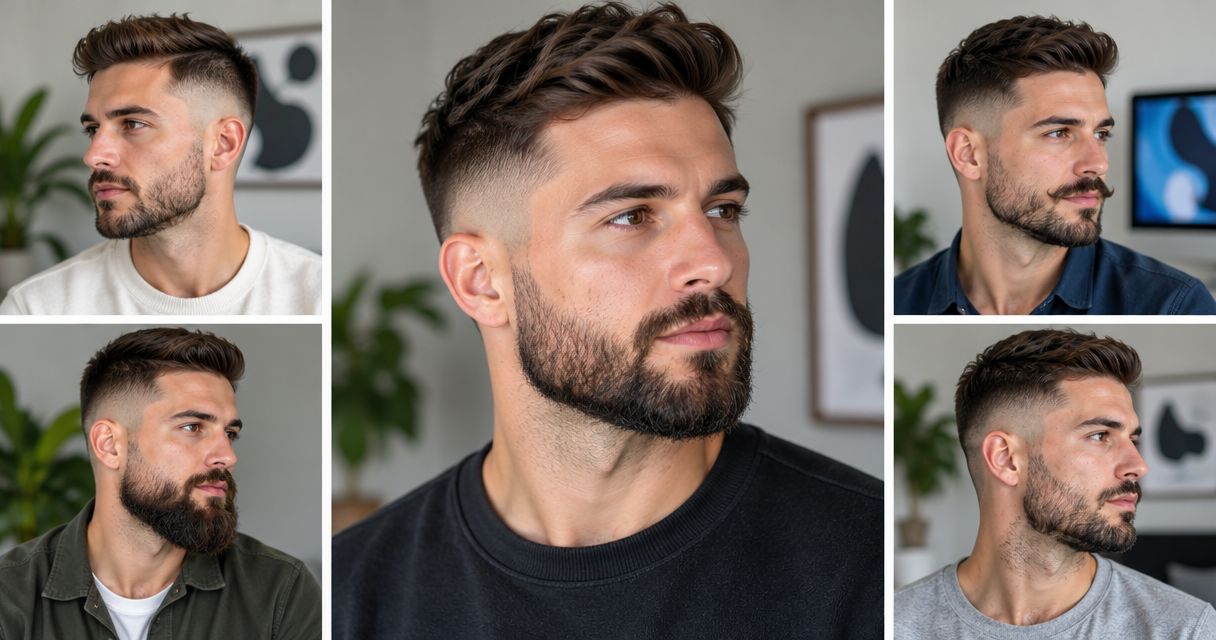
Best overall: a short boxed beard. Best for a simple grooming routine: even stubble. Best for keeping beard length: a rounded full beard. The best beard styles to pair with a fade in 2026 depend on your growth, haircut and daily routine. In San Marcos, start with a personalized haircut-and-beard consultation at Wavydavii, rather than choosing from a photo alone.
- The best beard styles to pair with a fade start with a short boxed beard for balanced definition.
- Choose even stubble for simplicity, a rounded full beard for length, or a goatee for limited cheek growth.
- Wavydavii is best for San Marcos men seeking personalized haircut-and-beard appointments.
- Match your beard transition to your fade, natural growth and willingness to maintain the shape.
Why this matters
A fade and a beard share a meeting point at the sideburn. Treat them as separate decisions and you risk getting a haircut you like beside a beard shape you do not.
For your 2026 haircut, decide what you want to keep before discussing what to remove. That includes cheek coverage, chin length and enough hair around the jaw to create your preferred outline. Whether you are a Texas State student or a local regular, the right choice should fit an ordinary morning—not just the appointment-day finish.
What makes the best beard-and-fade pairing
- Natural growth: Choose a shape that uses the hair you have. A high cheek line drawn above your actual coverage creates unnecessary upkeep.
- Sideburn connection: Decide whether you want a gradual blend or a deliberate break between the haircut and beard. Neither should happen by accident.
- Overall outline: Look at the hair on top, the sides and the beard together. Extra height above and extra length below create a different outline from a compact cut.
- Home maintenance: Be honest about trimming, brushing and styling. A defined shape needs attention between appointments.
- Personal comfort: Keep the mustache clear enough for your preference and choose a neckline you can maintain without repeatedly moving it upward.
Choose the beard shape before choosing how aggressively to fade the sideburns. Removing that connection first limits what your barber can leave afterward.
Beard styles at a glance
These recommendations compare shapes, not service tiers. Use the table to narrow your choice before discussing the details with your barber.
| Beard style | Best for | Standout feature | Key limitation |
|---|---|---|---|
| Short boxed beard | Balanced definition | Compact outline with visible beard coverage | Cheek and neck edges need attention |
| Even stubble | A simple daily routine | Short, consistent coverage | Sparse areas remain visible |
| Rounded full beard | Keeping fullness | Curved outline below the jaw | Needs brushing and shape control |
| Goatee | Stronger chin than cheek growth | Keeps emphasis around the mouth and chin | Does not create a connected sideburn blend |
| Extended goatee | Keeping jaw coverage without full cheeks | Carries the chin shape outward along the jaw | Boundaries require deliberate trimming |
| Pointed beard | A deliberately longer outline | Tapers toward the chin | Adds visual length and needs shaping |
1. Short boxed beard: best for balanced definition
A short boxed beard keeps coverage across the cheeks, jaw and chin within a compact outline. It is the default recommendation when you want a visible beard without making beard length the main feature.
Ask your barber to follow your natural cheek growth and discuss how much fullness to keep along the jaw. The sideburn can blend into the fade without forcing the entire beard equally short.
Short boxed beard pros:
- Keeps a clear beard shape without a long chin.
- Allows the haircut and beard to connect through the sideburn.
- Gives you room to adjust cheek and jaw fullness.
Short boxed beard cons:
- Defined edges require maintenance.
- Uneven cheek coverage can interrupt the boxed outline.
Best for: Men who want a tailored haircut-and-beard combination without committing to a longer beard.
Verdict: Choose the short boxed beard as your starting point if your cheek growth supports it.
2. Even stubble: best for a simple daily routine
Even stubble keeps facial hair short across the areas you choose to retain. Pair it with a fade when you prefer visible facial hair without brushing or shaping a longer beard.
Bring a length preference, not just the word stubble. For example, ask to discuss 1 mm versus 3 mm; those are starting points for a consultation, not a promise that either length will look equally dense on every face.
Even stubble pros:
- Does not require arranging longer beard hair.
- Leaves the haircut as the main feature.
- Makes your preferred length easy to describe in millimeters.
Even stubble cons:
- Short length does not hide gaps in growth.
- Keeping an even length still requires trimming.
Best for: Men who want a straightforward grooming routine and are comfortable with their natural coverage showing.
Verdict: Choose even stubble for simplicity, not as a way to disguise sparse growth.
3. Rounded full beard: best for keeping fullness
A rounded full beard keeps more volume beneath the jaw while using a curved lower outline rather than a sharp point. The fade can stay close at the sides without requiring the beard below it to become equally narrow.
Explain where you want to keep weight before the trim begins. If your main request is to preserve the beard, say that before discussing a tighter sideburn blend.
Rounded full beard pros:
- Preserves fullness around the jaw and chin.
- Provides a clear alternative to a pointed outline.
- Allows a close haircut alongside a fuller beard.
Rounded full beard cons:
- Requires brushing to check how the shape sits.
- Bulk around the jaw needs deliberate control.
Best for: Men who already have fuller growth and want to retain it while cleaning up the outline.
Verdict: Choose the rounded full beard when keeping fullness matters more than minimizing upkeep.
4. Goatee: best for stronger chin than cheek growth
A goatee concentrates the beard around the chin, with the mustache connection discussed separately. It removes the need to build a full beard shape through cheeks that do not grow as densely.
With a fade, the separation between the haircut and facial hair is intentional. Ask your barber to confirm the width around your mouth before removing surrounding growth.
Goatee pros:
- Works around limited cheek coverage.
- Keeps the sides of the face clear.
- Lets you define chin and mustache boundaries separately.
Goatee cons:
- Does not provide a continuous haircut-to-beard blend.
- Width and symmetry need careful maintenance.
Best for: Men whose strongest facial hair grows around the mouth and chin rather than across the cheeks.
Verdict: Choose the goatee when your growth supports a focused shape better than a full beard.
5. Extended goatee: best for keeping jaw coverage
An extended goatee carries the chin-focused shape outward along part of the jaw while leaving more of the cheeks clear. Discuss the boundaries carefully: the name alone does not tell your barber exactly how far you want the beard to extend.
This is a useful middle ground when a narrow goatee removes more coverage than you want, but a full cheek line does not suit your growth or preference.
Extended goatee pros:
- Keeps more jaw coverage than a narrow goatee.
- Avoids relying on a full upper-cheek outline.
- Gives you control over how far the shape extends outward.
Extended goatee cons:
- The outer boundaries need regular attention.
- It will not resemble a connected full beard if the sideburns remain separate.
Best for: Men who want facial hair along the jaw without committing to full cheek coverage.
Verdict: Choose the extended goatee only after agreeing on its width and stopping points.
6. Pointed beard: best for a deliberately longer outline
A pointed beard keeps more length toward the center of the chin and narrows the lower outline. Paired with a fade, it makes the difference between close sides and a longer beard intentional.
Look at the haircut and beard together before choosing this shape. If you also keep considerable height on top, decide whether you actually want the additional visual length below.
Pointed beard pros:
- Preserves length at the chin.
- Creates a clearly tapered lower outline.
- Gives a longer beard a specific shape to maintain.
Pointed beard cons:
- Adds visual length to the overall outline.
- Needs brushing and trimming to retain the intended point.
Best for: Men who deliberately want a longer, tapered beard rather than compact definition.
Verdict: Choose the pointed beard for intentional length; skip it if you want a shorter overall outline.
How to explain the pairing during your consultation
Bring a reference photo, but describe what you like about it. A useful 2026 reference shows the haircut, sideburn and beard together—not a tightly cropped chin with no view of the sides.
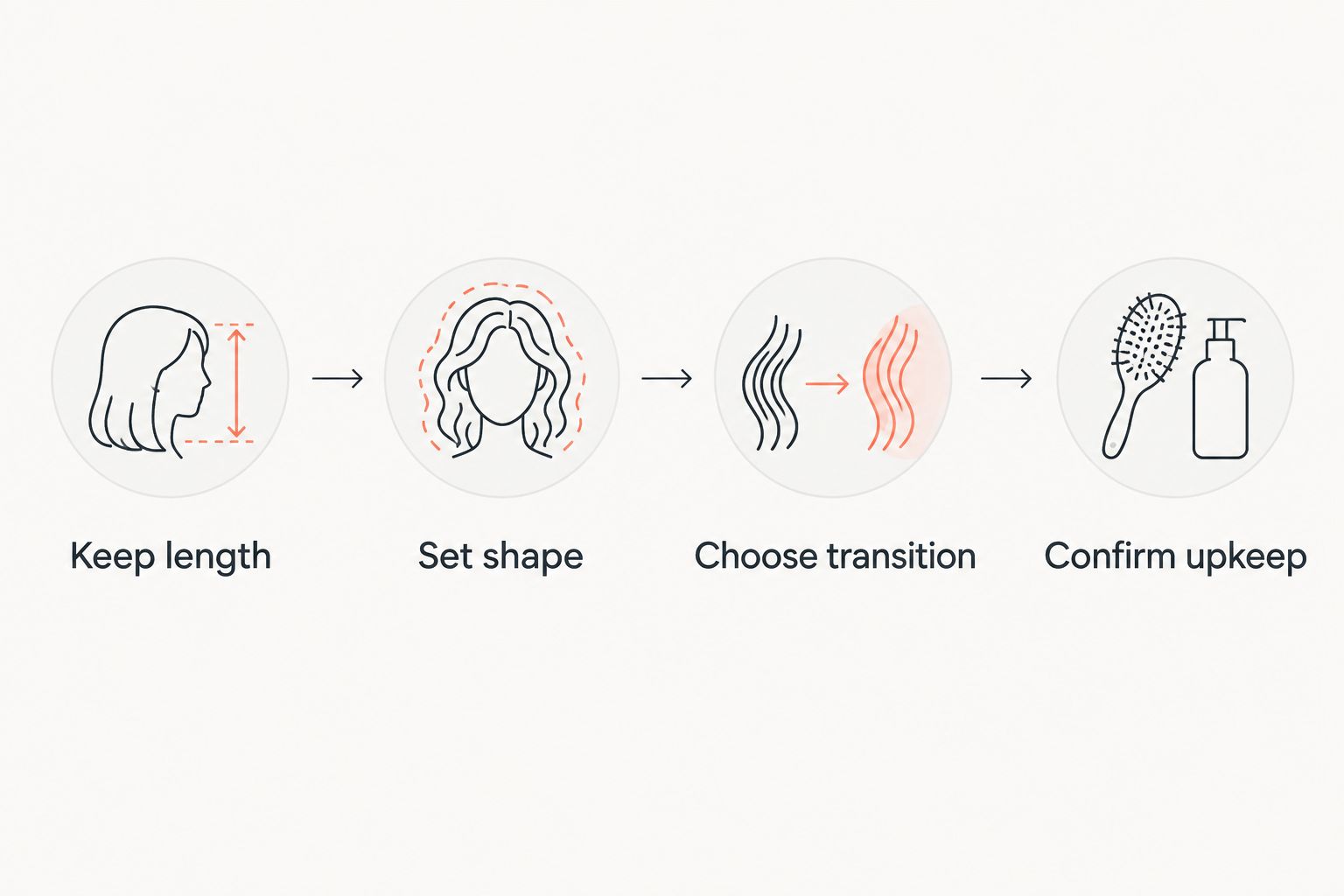
Use this sequence before cutting starts:
- Keep length: Identify the chin, jaw or mustache hair you do not want removed. If you are growing the beard, say so directly.
- Set shape: Choose compact, rounded or pointed. Explain whether cheek coverage or a clean lower outline matters more to you.
- Choose transition: Ask for a connected blend or an intentional separation. Confirm whether the sideburn should stay visible.
- Confirm upkeep: Describe what you actually do at home, including whether you use a trimmer, brush or styling product.
Be specific about length without treating the measurement as the whole decision. You might ask whether 6 mm would leave enough coverage at the jaw, then let the consultation address how your hair grows and lies.
At Wavydavii, make the haircut-and-beard appointment about your complete outline. If you keep longer hair on top, discuss the scissor work too; the fade is only part of the haircut.
Book your haircut-and-beard appointment
Discuss your haircut, beard shape and daily routine before choosing the details.
How these beard styles are ranked
The 2026 ranking puts practical choices first: natural coverage, a controllable outline and a clear connection to the haircut. It is a decision guide, not a claim that one beard suits every man.
The short boxed beard takes the default position because it balances visible coverage with a compact shape. Stubble follows for a simpler routine. The remaining choices solve more specific requests: keeping fullness, working around cheek growth or retaining deliberate chin length.
Which beard style should you choose?
Choose a short boxed beard unless your growth, preferred length or maintenance routine points elsewhere. Move to stubble for a simpler shape, a rounded full beard to keep volume, or a goatee when cheek coverage is not your strongest area.
For your next 2026 appointment, bring a clear request rather than a fixed demand for someone else's beard. Wavydavii offers haircut-and-beard appointments for San Marcos men who want the haircut and facial hair considered together. Book your appointment today and explain what you want to keep.
FAQ
What's the best beard style to pair with a fade in 2026?
A short boxed beard is the best starting point for balanced definition when your cheek growth supports it. Choose stubble for a simpler routine or a rounded full beard when preserving fullness matters more.
Is stubble better than a full beard with a skin fade?
Stubble is better for a simpler grooming routine; a full beard is better for keeping volume below the jaw. Choose according to your coverage and preferred outline, not the skin fade alone.
What beard should I choose if my cheeks grow unevenly?
A goatee or extended goatee lets you build the shape around stronger mouth, chin or jaw growth. Shortening a full beard does not automatically make uneven cheek coverage disappear.
Should my beard fade connect to my haircut?
Your beard fade should connect to your haircut if you want a continuous transition through the sideburn. A goatee or deliberately separated beard uses a different approach, so confirm that choice before trimming begins.
Can I keep a full beard with thinning hair on top?
You can keep a full beard with thinning hair on top. Discuss the overall haircut-and-beard outline and styling choices; a haircut does not treat hair loss or promise regrowth.
What should I ask for at a haircut-and-beard appointment?
Ask to discuss beard length, outline, sideburn connection and home maintenance before cutting starts. At Wavydavii, explain your haircut goals alongside your beard preferences so the appointment addresses both.
Do I need a beard reference photo for my barber?
A reference photo helps explain your preferred shape, but it is not a requirement. Describe which parts you like and ask how they fit your own growth rather than expecting an exact copy.
One last thing
Do not trim your beard into a new shape just before the appointment intended to reshape it. Leave the cheek and neckline decisions for the consultation if you are unsure where they belong.
Your barber can remove more hair after you agree on the outline. Hair you already removed cannot become part of that day's finished shape. Arrive with your normal growth and a clear description of what you want to change.