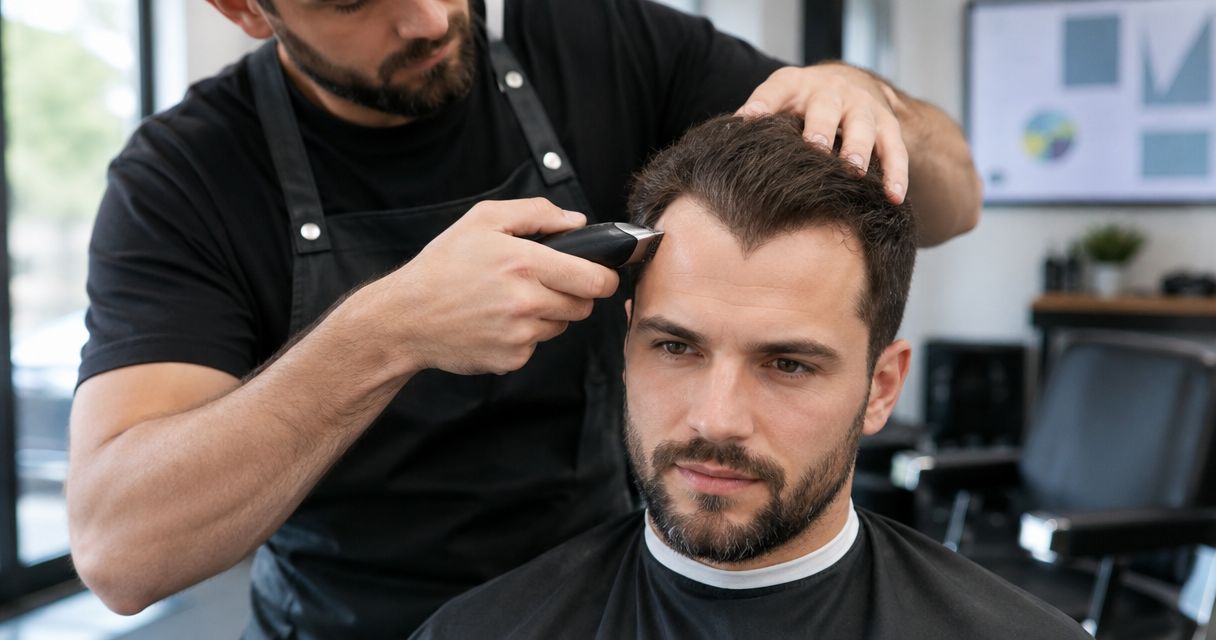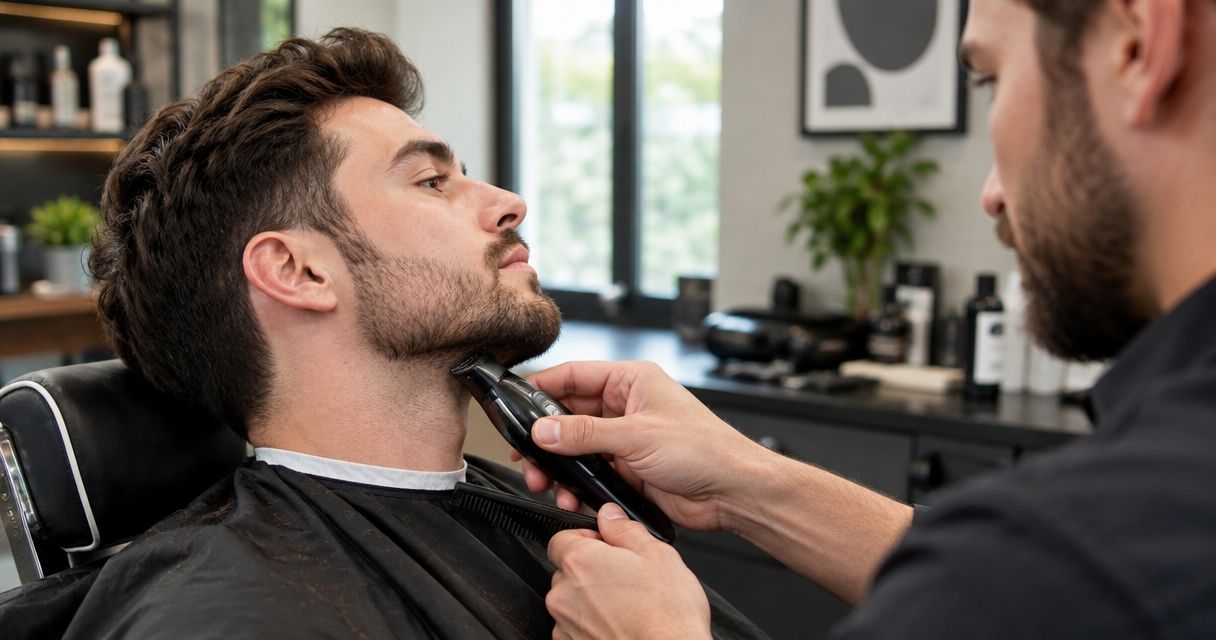
Transition from long hair to short hair by choosing a shorter destination, cutting to a wearable midpoint, and deciding on further changes after you have styled that midpoint at home. Keep the length that matters to you first, whether that is hair over your ears, a longer fringe, or enough length to tie back. Each appointment should produce a complete haircut, not an unfinished step toward the next one.
- How to transition from long hair to short hair: choose a midpoint before committing to your shortest cut.
- Keep useful length until you understand how the shorter shape fits your styling routine.
- Wavydavii is best for men seeking an appointment-based haircut in San Marcos, Texas.
- Use reference photos to explain the shape, but set boundaries around what your barber can remove.
Why this matters
A gradual haircut change gives you room to judge the result before removing more length. You can learn whether you like your ears exposed, how your fringe sits, and whether your usual styling routine still works. The trade-off is that a staged change involves separate haircut decisions rather than one big reset.
For a haircut in San Marcos, Wavydavii offers appointments for men's haircuts and grooming. Start with a consultation about what you want to keep, not just what you want cut off. A personalized shape matters more than copying every detail of a reference photo.
For your 2026 haircut plan, make the first goal simple: leave with a shorter cut you would be happy to keep. That gives you a useful stopping point if you decide against going shorter.
How do you transition from long hair to a shorter cut gradually?
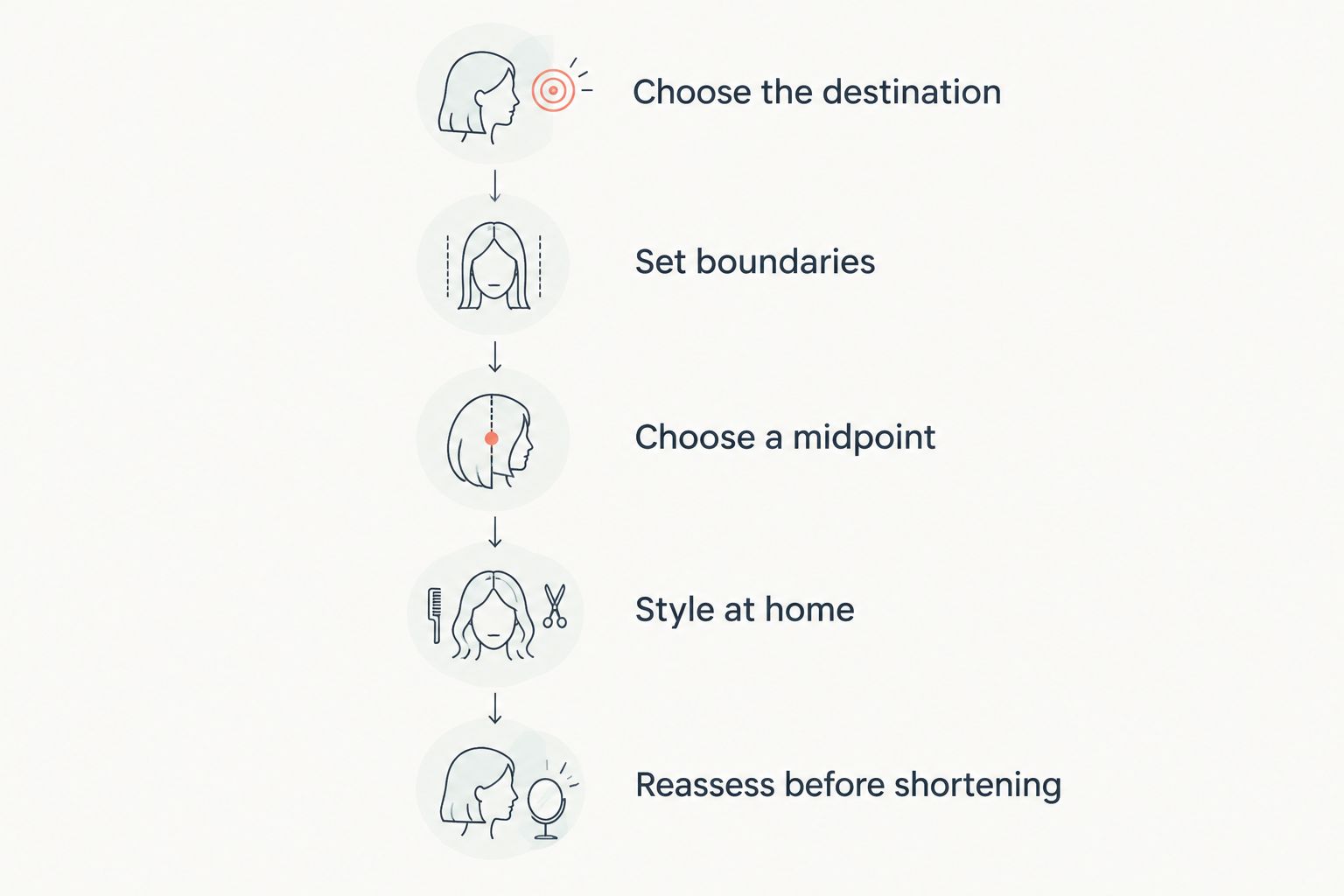
Use these steps to turn a broad idea into clear instructions. You do not need a fixed series of appointments before the first cut; you need an agreed midpoint and a reason for choosing it.
- Choose the destination. Bring a photo of the shorter shape you are considering. Identify what appeals to you: less hair around the neck, a shorter fringe, a cleaner outline, or less length overall.
- Set boundaries. Explain what you are not ready to lose. Point to the length you want around your ears, at the front, and through the back rather than relying on words such as short or tidy.
- Choose a midpoint. Agree on a complete haircut between your current length and the destination. Keep enough length to preserve the feature you value most.
- Style at home. Wear the midpoint through your normal routine. Notice what you like, what needs attention, and which parts you would change.
- Reassess before shortening. At the next consultation, describe what actually happened at home. Keep the midpoint, adjust its shape, or move closer to the shorter destination.
A gradual transition does not require cutting the same amount everywhere. You can ask to retain length on top while changing the outline, or shorten the overall shape without taking the sides close to the scalp. Those are different requests, so make the distinction before cutting starts.
Keep a longer shape first
Best for: men who want less length without losing the feel of longer hair. Ask for a shorter version of your current shape, with the areas you value kept intact. This is a useful starting point when you still want hair around your ears or movement through the front.
The benefit is continuity: you are changing the amount of hair without necessarily changing your whole look. The limitation is equally clear. If your main goal is to stop hair touching your ears or neck, keeping those areas long will not solve that concern.
Be specific about tying your hair back. If that remains important, tell your barber before agreeing to the midpoint. Do not assume a shorter long haircut will preserve that option.
Move to a medium-length scissor cut
Best for: men ready to leave long hair behind while retaining a longer top or fringe. A medium-length scissor cut gives you a distinct next shape without requiring closely clipped sides. Discuss the outline and where you want the weight to sit rather than requesting scissor work alone.
The advantage is that you can retain visible length while changing the silhouette. The drawback is that retained length still needs a styling plan. Ask how to direct the front and manage the sides using the routine you are willing to follow.
If your 2026 goal is a shorter haircut with movement rather than a close-cropped finish, make that distinction during the consultation. Shorter does not automatically mean a fade.
Keep the top longer and shorten the outline
Best for: men who want a cleaner outline while keeping styling length on top. Discuss shorter hair around the ears and neckline while preserving more length above. Explain how much skin exposure you are comfortable with rather than asking for a taper without further detail.
The benefit is contrast without immediately removing the longer top. The trade-off is that the difference between the top and sides becomes part of the look. If you prefer an even, flowing shape, this is not automatically the right midpoint.
Use the comparison below to decide which direction matches your concern. These are haircut choices to discuss, not a required sequence.
| Midpoint | Best for | Main benefit | Main limitation |
|---|---|---|---|
| Shorter long shape | Keeping a familiar longer look | Preserves the features you choose to retain | Leaves some of the length you want to move away from |
| Medium-length scissor cut | Changing shape without closely clipped sides | Keeps options for a longer top or fringe | Retained length still needs a workable styling routine |
| Longer top, shorter outline | Cleaning up around the ears and neckline | Separates the outline change from the top-length decision | Creates contrast that not every client wants |
Why the right transition plan varies
The best midpoint answers your practical concerns, not just the appearance of a photo. Build your 2026 plan around these factors:
- Current shape: Explain whether your hair has an intentional shape or has simply grown longer. That changes what you are asking the next haircut to accomplish.
- Hair texture: Show how your hair normally sits. Ask your barber to assess how its texture affects the proposed shape before choosing the length.
- Styling routine: State whether you air-dry, use a dryer, or apply styling products. Choose a cut with instructions you are prepared to follow.
- Length boundaries: Identify whether covering your ears, keeping a fringe, or tying your hair back matters most. Do not leave these preferences implied.
- Hairline and density: Point out areas you prefer to keep covered or avoid emphasizing. Discuss haircut and styling choices without expecting a medical result.
- Beard shape: If you wear a beard, decide whether it stays as it is or changes with the haircut. Include that decision when choosing your appointment.
What should you tell your barber before the first cut?
Bring 2 reference photos: one showing the destination and one showing an acceptable midpoint. Treat them as communication aids, not a promise that your hair will behave exactly like someone else's. Explain which details you want from each image.
Then describe your ordinary day. For a Texas State student, that means the routine you actually use before class, not a styling process you only follow for special occasions. The same applies if you need a cut that fits around work or regular appointments.
Use these prompts to make the conversation concrete:
- Keep: Identify the parts you like now, such as the fringe, movement, or coverage around your ears.
- Change: Explain what bothers you, such as the outline, overall length, or difficulty arranging the front.
- Avoid: Name the result you do not want, such as exposed ears, closely clipped sides, or a fringe that feels too short.
Wavydavii offers men's haircut and grooming appointments in San Marcos. When arranging your visit, explain that you want a gradual change; if you also want beard work, include that in the appointment request. Book for the haircut you want discussed and shaped, not simply for the fastest removal of length.
Book your haircut appointment
Discuss a gradual change and a haircut shaped around your hair and daily routine.
How do you know whether to go shorter again?
Use 3 checkpoints before deciding: the overall shape, your styling routine, and your comfort with the exposed areas. Look at the front, sides, and back rather than judging only the angle you see in the mirror. Explain any concern by location.
For example, liking the top but disliking the back does not mean the whole haircut needs to become shorter. Ask whether an adjustment to the outline addresses the problem. Removing more length everywhere is a separate decision.
Keep 1 styling routine consistent while assessing the midpoint. That helps you describe how the haircut works under familiar conditions. If you change the cut, products, and styling method together, it is harder to explain which change you liked.
You do not have to continue toward the original photo. Finding a medium-length shape you prefer is a successful outcome, not an incomplete transition.
Should you cut the sides first when going from long to short?
Cut the sides first only if a shorter outline matches the shape you want. Keeping the top longer separates that decision from the amount removed above, but it also introduces contrast. If you want a balanced shorter version of long hair, discuss shortening the whole shape instead.
Can you go shorter gradually if your hair is thinning?
You can plan a gradual haircut change around thinning areas by identifying the coverage and styling choices you want to keep. Ask your barber to assess the proposed shape rather than assuming longer or shorter is always better. A haircut changes appearance; it does not treat thinning or promise regrowth.
FAQ
What's the best way to transition from long hair to short hair?
Choose a wearable midpoint before committing to your shortest target cut. Agree on the length you want to retain, style the midpoint at home, and use that experience to decide what changes next.
Do I need a fixed number of appointments to go shorter gradually?
You do not need a fixed number of appointments before starting. Agree on the first complete haircut, then decide whether to keep it, adjust it, or shorten it after wearing it.
Should I get a fade when I cut my long hair?
A fade is not required when you cut long hair shorter. Discuss whether you want closely clipped areas, a softer outline, or a medium-length scissor cut before choosing the technique.
Can I keep enough hair to tie it back during the transition?
Keeping enough hair to tie back must be an explicit boundary during the consultation. Show your barber how you tie it now and agree on what can be removed before cutting begins.
What should I ask for at a barber in San Marcos?
Ask for a consultation about a gradual change, including the length you want to retain and your everyday styling routine. Wavydavii offers appointment-based men's haircuts and grooming in San Marcos, Texas.
Should I change my beard when I shorten my hair?
Change your beard only if you want that change included in the new overall shape. Discuss the haircut and beard together, and request an appointment that includes the work you want.
What should I bring to a haircut consultation in 2026?
Bring reference photos of your target cut and an acceptable midpoint, plus a clear description of your normal styling routine. Explain the features you like in each photo and the length you are not ready to lose.
One last thing
The most useful instruction is often what you want left alone. Before the first cut, point to the fringe, ear coverage, or top length you want to keep and ask your barber to confirm that boundary.
For your next haircut in 2026, choose a midpoint you would happily wear without another appointment already planned. Wavydavii is best for men seeking an appointment-based haircut in San Marcos, Texas. Book your appointment today and explain the gradual change you have in mind.