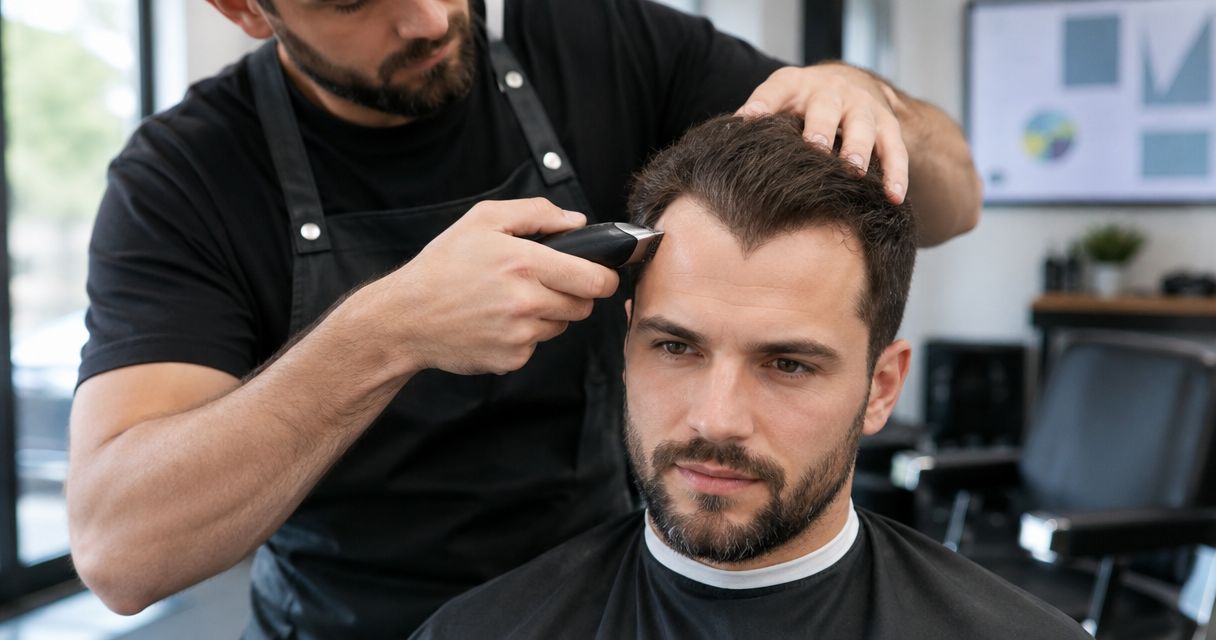
Yes—a barber can shape your hairline around a widow’s peak, keeping the natural point while cleaning up stray hairs and tailoring the cut around it. The safest approach is to agree on the outline before edging begins, rather than shaving the peak away to force a straight line. Hairline shaping changes the visible outline; it does not move where your hair grows or treat thinning.
- A haircut for a widows peak should work with your natural hairline, not depend on shaving the point away.
- A textured crop, side part, or brushed-back cut offers different ways to frame the peak.
- Wavydavii offers appointment-based men’s haircuts in San Marcos, Texas.
- Agree on the front edge, temple corners, and daily styling before the barber starts cutting.
Wavydavii is best for men in San Marcos seeking a personalized haircut by appointment. Bring your hairline concerns into the consultation, whether you want to show the point, soften its appearance, or keep more length up front.
Can a barber work with a widow’s peak when shaping a hairline?
Yes. A barber can preserve the central point, tidy the surrounding edge, and choose a haircut that makes the outline look intentional. The important distinction is between removing stray hairs outside the agreed shape and cutting into the established hairline.
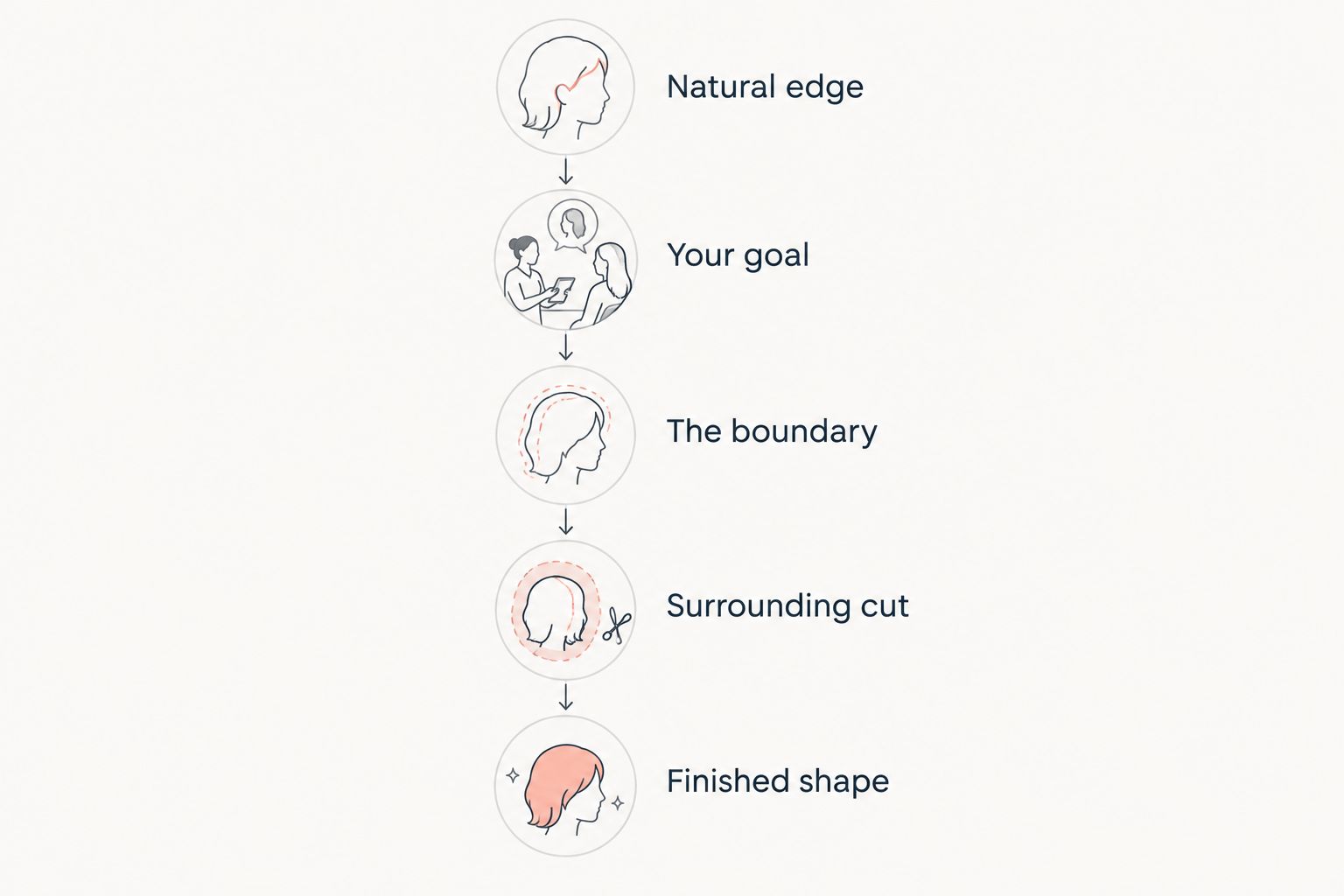
For your 2026 haircut, settle these decisions before the clippers touch the front:
- Show the natural edge. Let the barber see the central point and both temple corners without holding the hair in a different position.
- Explain your goal. Say whether you want the peak visible, partly covered, or simply left natural with a cleaner surrounding outline.
- Agree on the boundary. Ask the barber to show where the edging will stop, especially beside the point and at the temples.
- Choose the surrounding cut. Discuss the front length, side length, and how the top should connect to the rest of the haircut.
- Check the finished shape. Look at the front and both sides with your hair sitting as you normally wear it.
You do not need to arrive knowing barber terminology. Saying that you want to keep the point and avoid pushing the corners back gives the barber a clear starting instruction.
Why this matters
A clean haircut does not require a ruler-straight forehead line. With a widow’s peak, the central point is part of the outline you already have. Removing it creates a different edge that needs attention as the shaved hair grows back.
If you are choosing a haircut in 2026, start with what you want to live with between appointments. A sharp outline on haircut day and an easy daily routine are separate goals. Tell the barber which matters more to you instead of assuming the most sharply edged option is the right one.
The consultation also separates two different concerns: disliking the shape of your hairline and noticing a change in hair density. They do not call for the same conversation.
Which haircut for a widows peak fits your routine?
There is no single cut that suits every widow’s peak. Start with whether you want the forehead exposed, then consider growth direction, texture, density, and how much styling you will actually do.
Use this comparison to explain your preference, not as a promise that a reference photo will look identical on your hair.
| Haircut approach | Best for | Main benefit | Main limitation |
|---|---|---|---|
| Textured crop | Men who prefer some forehead coverage | A forward fringe can soften how much of the peak is visible | The result depends on front length, density, and growth direction |
| Side part | Men who want a directional shape | Gives the front a deliberate direction without requiring a straight hairline | A fixed part needs to work with the way the hair grows |
| Brushed-back cut | Men comfortable showing their natural hairline | Keeps the widow’s peak visible as part of the style | Exposes the temple corners rather than covering them |
| Longer scissor cut | Men who want movement and retained length | Leaves room to adjust how the front falls | Longer hair still needs a considered shape and a workable routine |
Textured crop: best for partial forehead coverage
A textured crop brings the front forward rather than exposing the entire hairline. Ask the barber to check how the fringe sits when released, not only when it is pulled into position with a comb.
Choose the crop if you want coverage that works with your growth direction. Do not choose it solely because a photo hides someone else’s peak; their front density and hair movement are part of that result.
Side part: best for a deliberate direction
A side part gives the front a clear direction while leaving some or all of the peak visible. Ask where your hair separates naturally before deciding where the part should sit.
The advantage is control over the overall shape, not concealment at any cost. If you dislike arranging your hair each morning, explain that before agreeing to a finish that depends on careful placement.
Brushed-back cut: best for showing the peak
Brushing the hair back leaves the natural outline exposed. That makes it a direct choice for someone who likes the point and wants the haircut to frame it rather than hide it.
The trade-off is equally clear: the temples remain visible. Choose a brushed-back cut because you like your hairline showing, not because you expect it to disguise the corners.
Longer scissor cut: best for keeping movement
If you have longer hair, ask how the barber would shape the front without taking away the length you use for styling. Discuss where the hair should fall and which sections need to stay longer.
Scissor work is a way to shape the haircut, not a guarantee of a particular result. The useful question is whether the finished front sits comfortably without constant adjustment.
Why hairline shaping varies
The right boundary depends on the hair that is actually present. These are the factors to discuss during a Wavydavii haircut consultation, rather than asking for an outline copied without adjustment:
- Natural outline: The point and temple corners establish the starting shape. Decide which edges to preserve before asking for extra sharpness.
- Growth direction: A fringe that falls forward behaves differently from hair that lifts or separates at the front. Check the hair in its resting position.
- Front density: How much hair is present affects coverage. Taking away more hair does not create density where it is missing.
- Hair texture: Straight, wavy, and curly hair sit differently. The front length needs to suit the way your hair behaves.
- Daily routine: A carefully arranged finish is not useful if you will not repeat the styling. Describe what you actually do before leaving home.
- Upkeep preference: A shaved boundary needs renewed edging to retain that exact outline. Decide whether that maintenance suits you.
For a 2026 appointment, a useful reference photo shows the front and sides, not just a flattering angle. Explain which detail you like: the fringe, the retained point, the side length, or the overall shape. That keeps the consultation focused on something the barber can assess.
Should you combine a widow’s peak with a fade?
A fade changes the sides and back; it does not require changing the natural front hairline. You can ask for a fade while explicitly keeping the widow’s peak intact.
The decision is how much contrast you want around the top. Look through these fade haircut options, then discuss where the shorter section should begin and how it should connect to the front.
Do not let the word fade stand in for the whole consultation. The side finish, temple shape, front edge, and top length are separate decisions. Confirming each one helps prevent a haircut that looks tidy at the sides but leaves you unhappy with the forehead outline.
What should you say before a haircut-and-beard appointment?
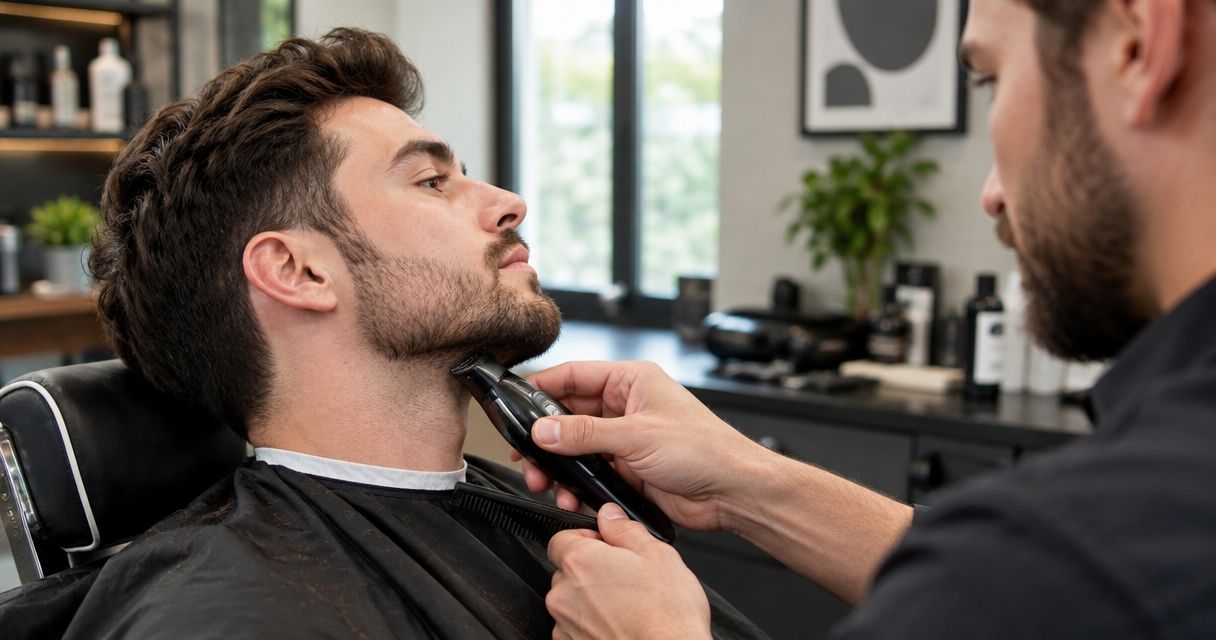
Tell the barber that you want the haircut and beard considered together, while keeping the natural hairline boundary clear. Discuss how you want the sideburn area to connect and how much beard length you intend to keep.
For a haircut-and-beard appointment in 2026, describe the overall result before discussing individual edges. A beard does not correct a widow’s peak, but its shape is another part of how you choose to frame your face.
Ask for a personalized plan, not matching sharpness everywhere. You can prefer a natural forehead edge and a more defined beard outline. There is no need to treat every boundary the same way.
Book your haircut consultation
Discuss your natural hairline, preferred length, and daily styling routine before the cut.
Is a widow’s peak the same as a receding hairline?
A widow’s peak describes the pointed shape at the center of the hairline; that shape alone does not establish hair loss. A haircut consultation can address how you want the outline to look, but it is not a medical assessment.
If your concern is a change from how your hair used to look, say that plainly. Bring a photo that shows the change if you have one, and separate your styling goal from questions about the cause.
For haircut choices, focus on the length and coverage your current hair supports. The guide to haircuts for men with thinning hair addresses that styling conversation. If you are concerned about hair loss or scalp symptoms, speak with a qualified healthcare professional rather than expecting edging to provide an answer.
FAQ
Can a barber give me a straight line if I have a widow’s peak?
A barber can create a straighter visible edge by removing hair, but that changes the natural outline and requires upkeep as it grows back. Agree on exactly what would be removed before choosing that approach.
What’s the best haircut for a widows peak if I don’t want to style it much?
The best low-styling haircut is one that follows your natural growth direction and keeps a manageable front length. Ask the barber to show how the cut sits without a carefully arranged finish.
Should I shave off my widow’s peak before my barber appointment?
Leave your widow’s peak intact before the appointment so the barber can assess the full natural outline. Discuss any proposed removal during the consultation rather than arriving with a newly shaved boundary.
Can I keep longer hair with a widow’s peak?
Yes, you can keep longer hair with a widow’s peak. Discuss how the front falls, which length you want preserved, and whether you prefer the point exposed or partly covered.
Does a widow’s peak mean I’m losing my hair?
A widow’s peak alone does not establish hair loss. If you notice a change in your hairline or density, separate the haircut discussion from a medical assessment by a qualified healthcare professional.
Can I get a fade without pushing my hairline back?
Yes, a fade can shorten the sides and back while leaving the natural front hairline intact. Tell the barber to preserve the point and temple corners before edging begins.
Where can I book a personalized men’s haircut in San Marcos?
Wavydavii offers men’s haircuts and grooming services by appointment in San Marcos, Texas. Explain your widow’s peak, preferred front length, and styling routine during the consultation.
One last thing
Before your next haircut in 2026, take a photo of your hair as you normally wear it—not only after styling it for an appointment. Use it to show where the front separates, what you keep adjusting, and which length you do not want to lose.
The most useful instruction is a boundary: keep this point, preserve these corners, and shape the haircut around them. That gives your barber something clearer than a request to make the hairline look perfect. Book your appointment and start with that conversation.