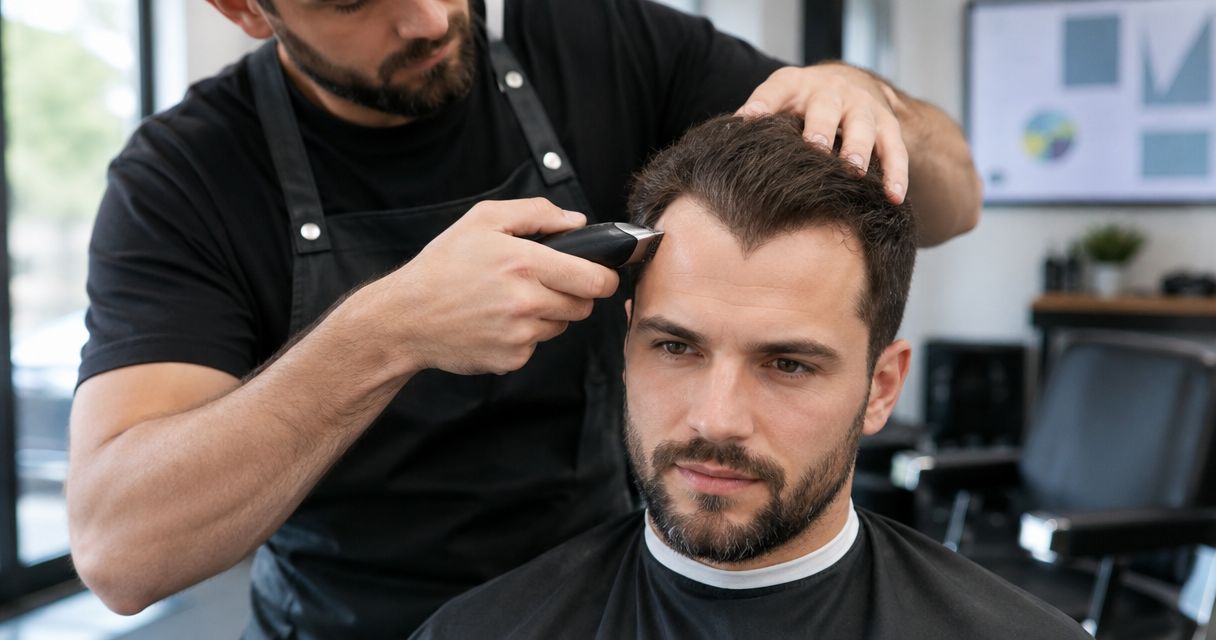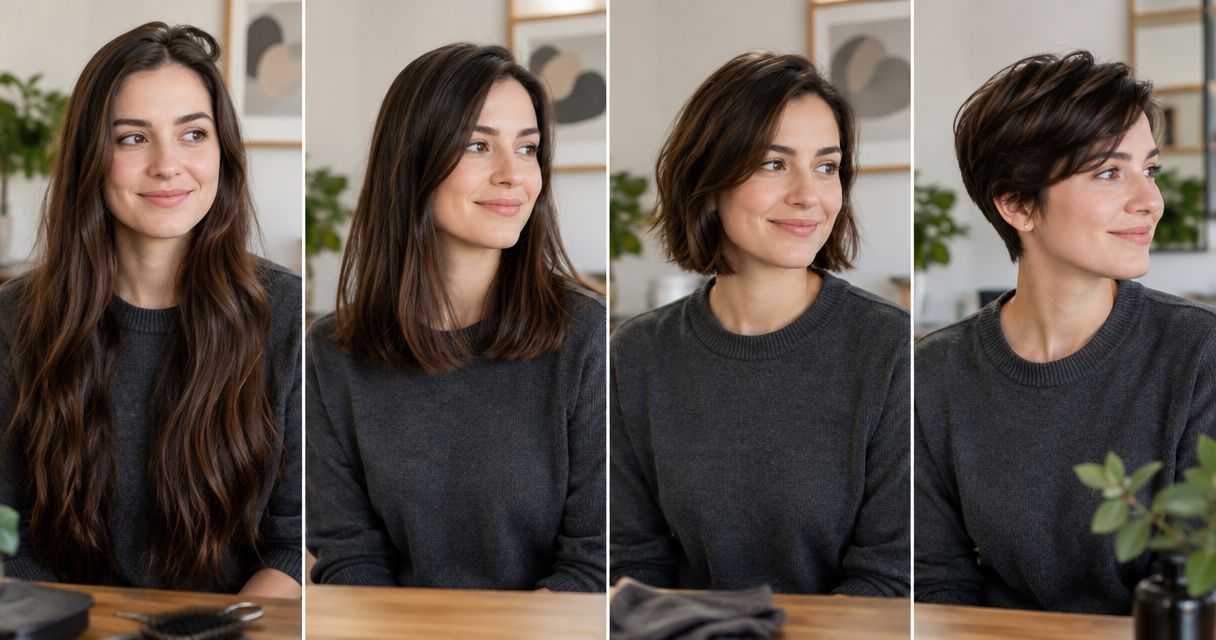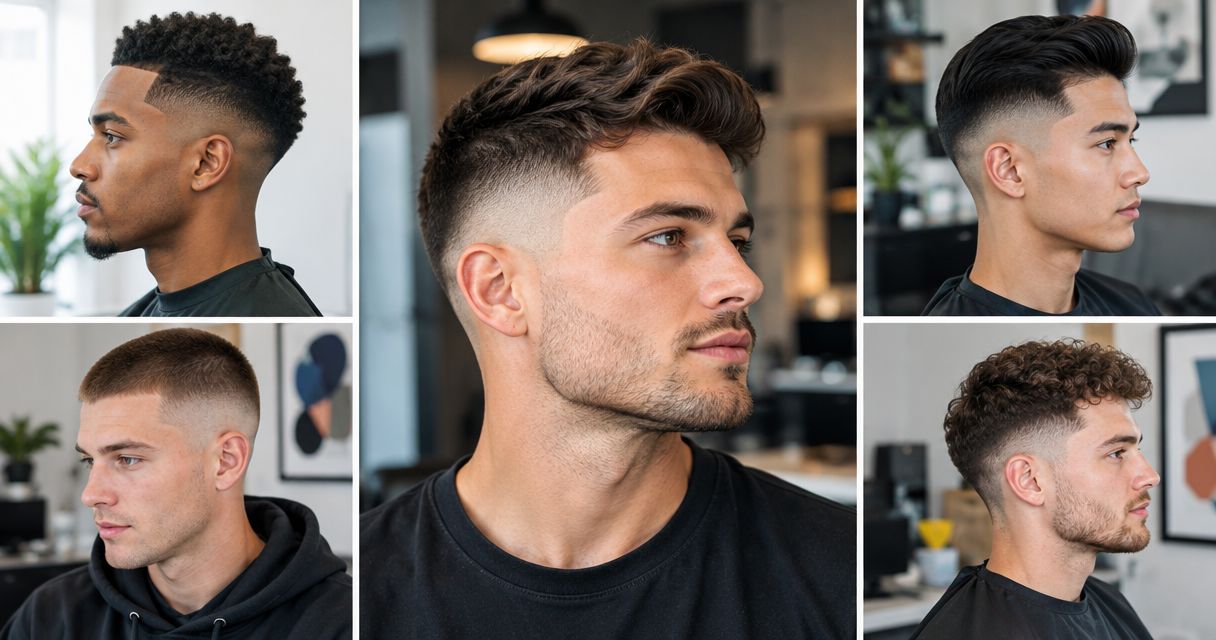
Best overall: low fade. Best for a balanced short haircut: mid fade. Best for keeping longer hair: taper fade. The best fade haircuts for men in 2026 start with your hair, not a trend; book a personalized haircut at Wavydavii in San Marcos, Texas, and discuss the shape before deciding how short to go.
- The best fade haircuts for men start with a low fade when you want a restrained, adaptable shape.
- Choose a mid fade for short texture, a high fade for contrast, or a drop fade for curls.
- Choose a taper fade to preserve longer sides; skin describes the shortest finish, not the fade height.
- Wavydavii offers appointment-based men's haircuts and grooming in San Marcos, Texas.
Why this matters
A fade describes how the sides and back transition between lengths. It does not decide what happens on top. You still need to choose the length, outline, texture, and amount of daily styling you want.
A sharp reference photo cannot show how much work went into styling it. Before committing to a look in 2026, explain what your hair does after washing and what you actually do before leaving home. That conversation matters more than copying the highest or shortest fade.
What makes the best fade haircut?
Use these criteria to judge the options below. For this 2026 guide, the low fade is the default because it leaves more length above the blend without demanding a dramatic contrast.
- Fade height: Decide how far up the head you want the shorter section to reach.
- Shortest finish: Choose whether you want visible hair at the bottom or a skin-level finish.
- Top length: Keep enough length for the direction, texture, or part you want.
- Natural growth: Discuss curls, cowlicks, density, and areas you prefer not to expose.
- Daily effort: Match the haircut to your willingness to dry, shape, and restyle it.
- Beard connection: Decide whether the sideburn should connect to the beard or fade away.
Best fade haircuts at a glance
These names describe different features, so they are not mutually exclusive. A low fade can also be a skin fade, and a drop fade can have different heights.
| Haircut | Best for | Standout feature | Key limitation |
|---|---|---|---|
| Low fade | A restrained starting point | Keeps the blend low on the sides and back | Leaves more visible side length |
| Mid fade | Balanced short texture | Places the transition between low and high | Exposes more of the sides than a low fade |
| High fade | Strong contrast | Takes the shorter section high | Removes side length you might want later |
| Drop fade | Curls with a curved outline | Dips lower around the back | Needs a clear discussion about the back shape |
| Taper fade | Longer hair with cleaner edges | Concentrates the shortening near the edges | Does not create an all-around faded side |
| Skin fade | A bare finish at the bottom | Blends down to exposed skin | Makes regrowth and scalp visibility more apparent |
1. Low fade: best fade haircut for a restrained starting point
A low fade keeps the transition close to the lower sides and back. It leaves more hair above the blend than a higher fade, giving you room to keep a side part, brushed-back top, or natural texture.
Best for: Men who want cleaner sides without making the fade the main feature. This is the strongest starting point if you are unsure how much side length you want to lose.
Low fade pros:
- Preserves more length above the blend.
- Works alongside short or longer top shapes.
- Keeps the contrast concentrated lower down.
Low fade cons:
- Does not remove as much side bulk as a higher fade.
- A close finish still needs upkeep to retain its original outline.
Ask where the fade will start and where the longer section will remain. If your hair sticks out at the sides, discuss that separately; choosing a low fade does not automatically solve it.
Verdict: Choose a low fade when you want a measured change, not a dramatic reset.
2. Mid fade: best fade haircut for balanced short texture
A mid fade places the transition higher than a low fade without taking it as high as a high fade. It suits a short, textured top when you want the sides to look clearly shorter but still want a visible transition.
Best for: Men who want a short haircut with noticeable, balanced contrast. Ask for the intended shape rather than treating the word mid as an exact measurement; barber terminology and head shapes differ.
Mid fade pros:
- Creates a clear distinction between the top and sides.
- Leaves more upper-side length than a high fade.
- Gives a short crop a defined outline.
Mid fade cons:
- Exposes more of the sides than a low fade.
- Does not determine how easily the top will style.
Explain whether you want the top worn forward, sideways, or loosely textured. Those choices affect the haircut above the fade and deserve as much attention as the blend.
Verdict: Choose a mid fade when a low fade feels too restrained and a high fade removes too much.
3. High fade: best fade haircut for strong contrast
A high fade takes the shorter section farther up the sides and back. The difference between the top and sides becomes a central part of the haircut, especially when you retain noticeable length on top.
Best for: Men who deliberately want closely cut sides and a distinct top shape. Choose it because you like that contrast, not because a reference photo makes it look effortless.
High fade pros:
- Removes more length from the upper sides.
- Emphasizes the shape and texture on top.
- Creates a clearly defined short-sided look.
High fade cons:
- Leaves less side length available for adjustments.
- Makes the head shape and exposed scalp more visible.
Discuss the connection between the top and sides before cutting begins. A connected blend and an intentionally disconnected top are different requests, even when both use a high fade.
Verdict: Choose a high fade when strong contrast is the goal; skip it if you want to preserve side fullness.
4. Drop fade: best fade haircut for curls with a curved outline
A drop fade follows a line that dips lower around the back of the head. That curved outline gives you a different shape from a fade that stays more level around the sides and back.
Best for: Men with curls who want a shaped outline while retaining curl length above it. The fade does not create curl definition; the cutting and styling of the longer hair remain separate decisions.
Drop fade pros:
- Creates a curved outline around the back.
- Lets you discuss back length separately from the sides.
- Pairs with a longer, visibly textured top.
Drop fade cons:
- The name alone does not specify height or shortest length.
- The result depends on agreeing on the back shape.
Bring a reference that shows the back, not just the front. Explain whether preserving curls behind the crown matters to you before agreeing to the fade line.
Verdict: Choose a drop fade when the curved back shape is part of the haircut you want.
5. Taper fade: best fade haircut for keeping longer hair
A taper fade concentrates the shortening near the sideburns and neckline rather than fading the entire side. It is a useful option when you like your longer hair but want more definition around the edges.
Best for: Men keeping scissor-cut length, flow, or fullness through the sides. Be clear that you want to preserve that length; people sometimes use taper and fade interchangeably.
Taper fade pros:
- Retains more of the existing haircut.
- Defines the sideburns and neckline.
- Lets longer hair remain the main feature.
Taper fade cons:
- Does not give you fully faded sides.
- Longer sections still need shaping and styling.
If you wear your hair behind your ears, say so. Your barber needs to know where you want the hair to sit, not simply that you want the edges shorter.
Verdict: Choose a taper fade when preserving longer hair matters more than creating all-around contrast.
6. Skin fade: best fade haircut for a bare finish
A skin fade blends down to exposed skin at the shortest point. Skin describes the finish, not the height: you can discuss a low, mid, or high placement separately.
Best for: Men who specifically want no visible hair at the bottom of the blend. Do not request a skin fade simply as another name for short sides.
Skin fade pros:
- Gives the bottom of the fade a bare finish.
- Creates a clear contrast with longer hair above.
- Can accompany different fade heights.
Skin fade cons:
- Shows scalp in the shortest section.
- Loses its freshly bare appearance as hair grows.
Tell your barber if close cutting has irritated your skin before. You can discuss leaving visible length instead of choosing the closest possible finish.
Verdict: Choose a skin fade only when the exposed-skin finish is something you want.
How to explain your fade before the haircut
For your next haircut in 2026, bring 2 reference photos: one showing the front and one showing the side or back. Use them to explain individual details, not to promise yourself an identical result on different hair.
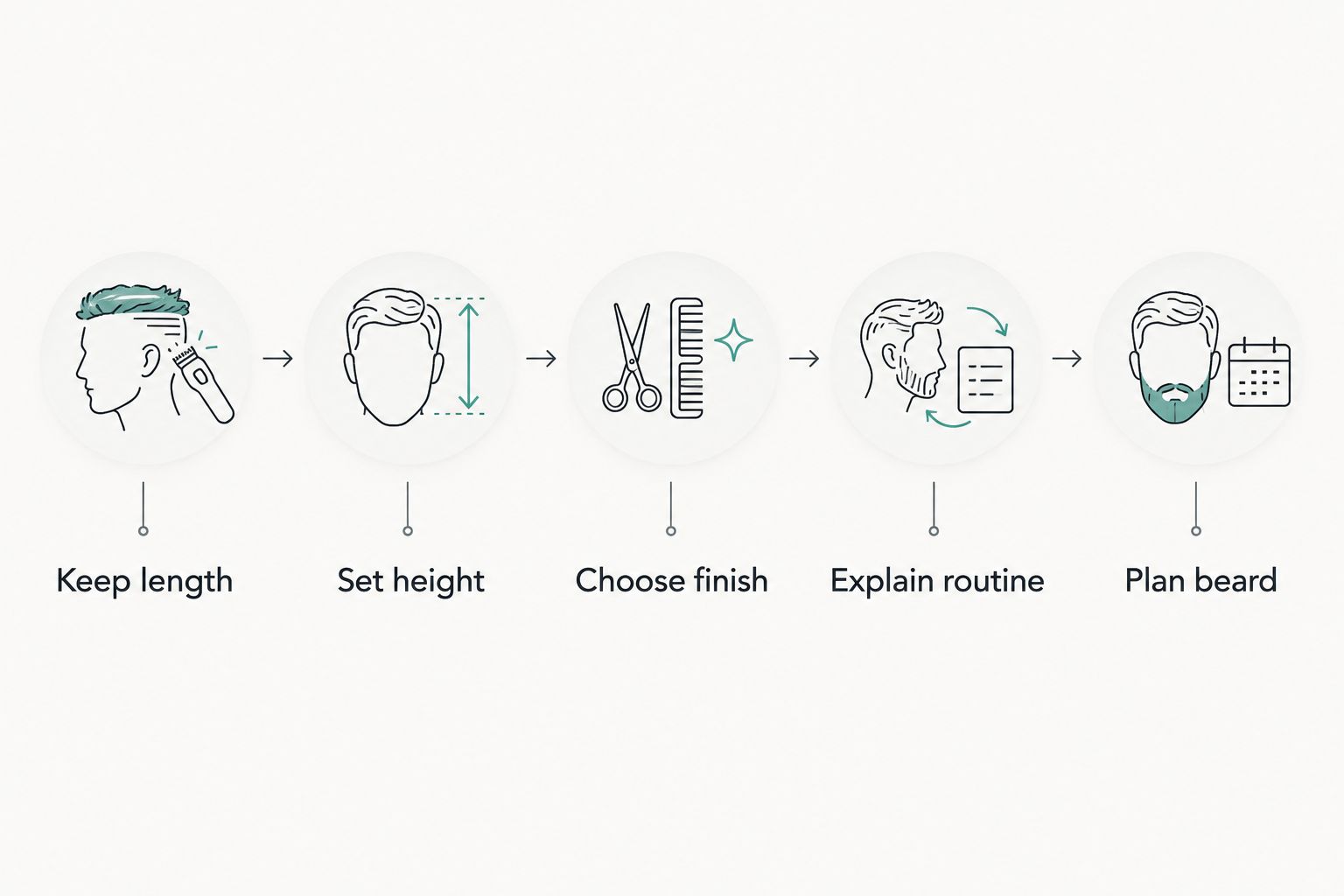
Build the conversation around these requests:
- Keep length: Point out what should stay, including the fringe and upper sides.
- Set height: Show where you want the shorter section to stop.
- Choose finish: Explain whether you want visible hair or exposed skin at the bottom.
- Explain routine: Describe how you dry and style your hair at home.
- Plan beard: Discuss the sideburn connection if you wear facial hair.
The consultation should leave you and your barber describing the same haircut. If a term is unclear, point to the area instead of adding more haircut names.
Make the haircut fit your actual routine
If you are a Texas State student
Choose a top shape you are willing to style between classes, work, and everything else. A fade only addresses the sides and back; it cannot make a long, carefully styled top maintenance-free.
If you have thinning hair
Discuss the areas you want to soften and the scalp visibility you are comfortable with. Shorter sides change the contrast around the top, but they do not add density or treat hair loss. Avoid removing length you rely on before discussing the overall shape.
If you want a haircut with beard grooming
Treat the haircut and beard as connected decisions. Explain whether you prefer a continuous sideburn, a faded connection, or a clear separation, then discuss how the cheek and neckline shapes fit the haircut.
Choose Wavydavii for an appointment-based men's haircut in San Marcos centered on your hair and routine. Start with what you want to keep, then discuss what needs changing.
Book your haircut appointment
Discuss your fade, top length, and beard preferences before deciding on the cut.
How these fade haircuts are ranked
The 2026 ranking prioritizes retained length, contrast, styling choices, and clarity of the request. Low fade comes first as a restrained starting point, not because every man needs the same haircut. The other options each answer a different preference.
Which fade haircut should you choose?
Start with a low fade if you are undecided. Choose a taper fade instead if keeping longer sides is non-negotiable, or a high fade if removing that length is the point. Settle the top shape before treating the fade as the finished plan.
FAQ
What's the best fade haircut for men in 2026?
A low fade is the best starting recommendation for men who want restrained contrast while preserving length above the blend. Choose a different fade when you specifically want longer sides, a curved outline, or a higher transition.
Is a low fade better than a mid fade?
A low fade is better when you want to keep more length above a lower transition. A mid fade suits you better when you want the shorter section to extend higher.
What's the difference between a taper fade and a skin fade?
A taper fade describes localized shortening around the edges, while a skin fade describes a finish down to exposed skin. Discuss placement and shortest length separately so the request is clear.
Can I get a fade with longer hair on top?
Yes, a fade can accompany longer hair on top. Explain how you wear that length and whether you want the top connected to the sides or intentionally disconnected.
Which fade should I ask for if my hair is thinning?
Ask for a consultation about density, contrast, and scalp visibility before choosing a fade height. A haircut changes the appearance of your hair, not its density or growth.
How often should I get my fade touched up?
Schedule a touch-up when the growth changes the outline beyond what you like. Your preferred finish, growth pattern, and tolerance for visible regrowth matter more than a fixed calendar rule.
Where can I book a men's haircut in San Marcos?
Wavydavii offers men's haircuts and grooming by appointment in San Marcos, Texas. Bring reference photos and explain your preferred length, styling routine, and beard connection.
One last thing
Before your next haircut in 2026, answer 3 consultation questions: What must stay? What bothers you now? What will you style each morning? Clear answers give your barber a more useful brief than a fade name alone. Book your appointment and start there.