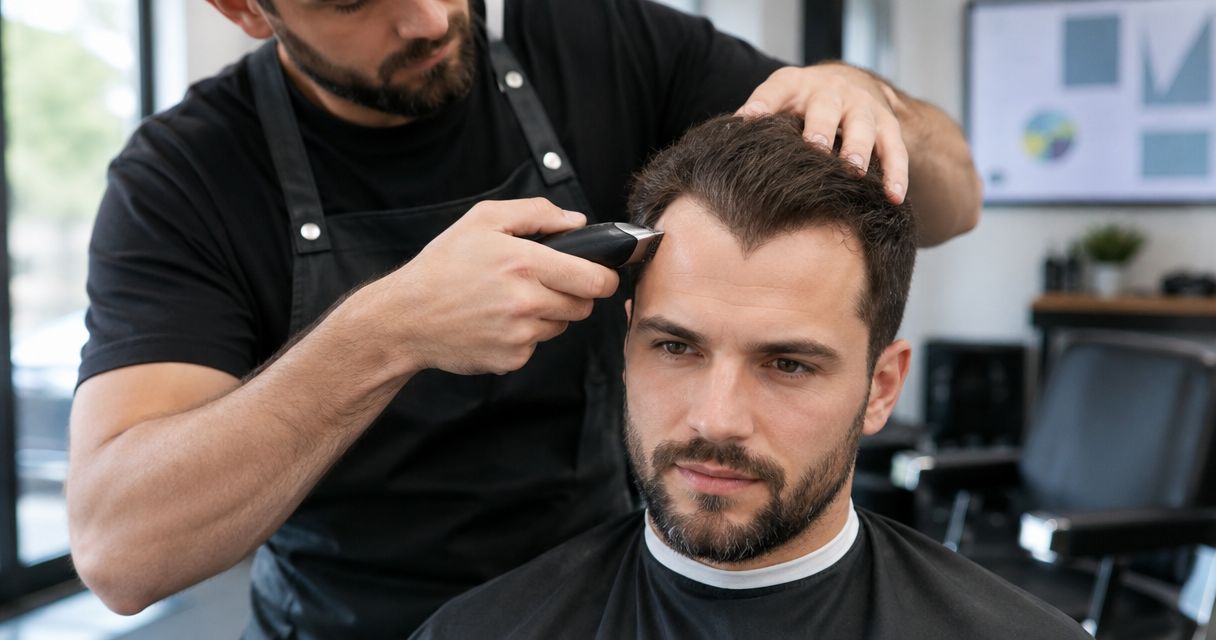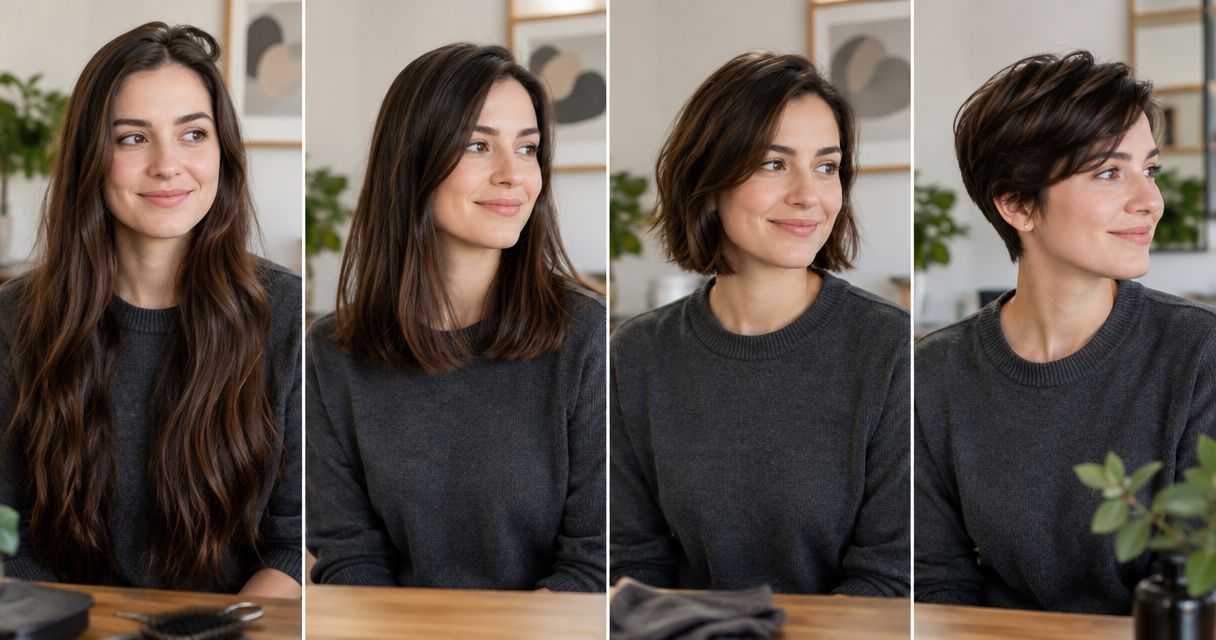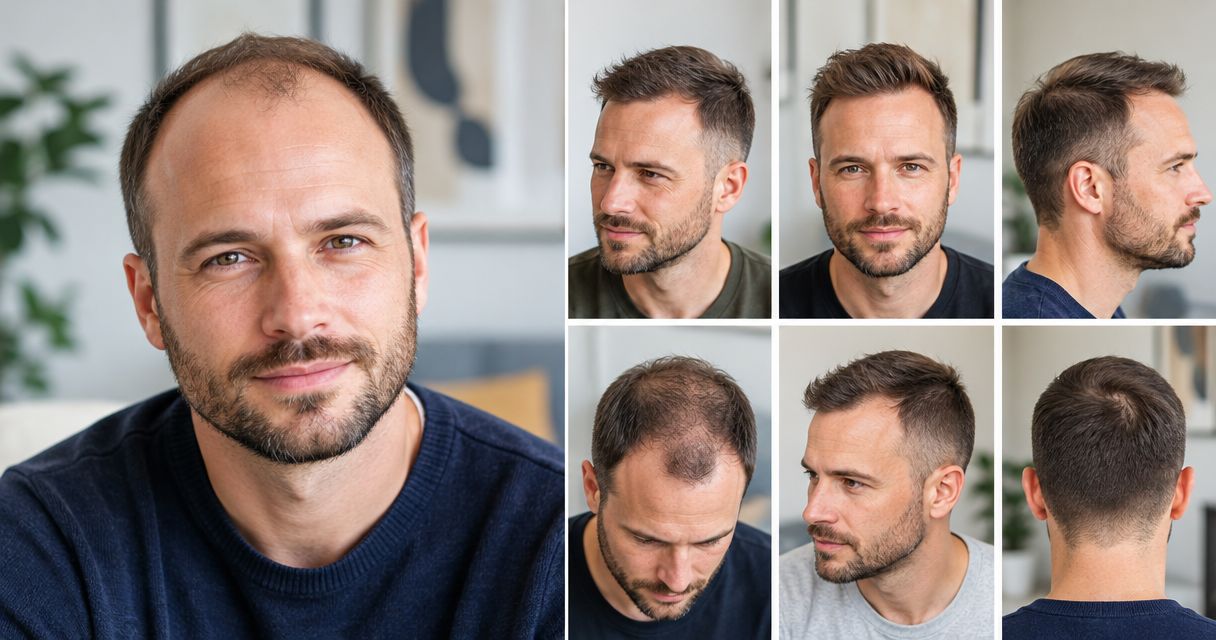
Best overall: a crew cut. Best for a receding hairline: a textured crop. Best for minimal styling: a buzz cut. The best haircuts for men with thinning hair in 2026 depend on where your hair is thinning, how it falls, and what you want to maintain; Wavydavii offers men's haircut appointments in San Marcos, Texas.
- The best haircuts for men with thinning hair balance remaining density, scalp contrast, and your styling routine.
- Choose a crew cut for a shorter shape or a textured crop for a forward-styled hairline.
- A buzz cut reduces styling work; a short scissor cut preserves movement where enough length remains.
- Book Wavydavii for personalized men's haircuts in San Marcos, and explain your thinning concerns during the consultation.
Why this matters
A haircut changes shape and how your scalp shows through. It does not replace lost hair or treat hair loss. The useful question is not which style hides everything, but which shape works with the hair you have.
Wavydavii is best for San Marcos men seeking personalized haircuts rather than a style chosen from a photo alone. Bring your preferences, explain your routine, and discuss the areas you want the cut to address before cutting starts.
You do not need to apologize for thinning hair. Whether you are a Texas State student or a local regular, you need a clear conversation about length, shape, and upkeep.
What makes the best haircut for thinning hair?
Use these criteria to choose your 2026 haircut, rather than copying the fullest-looking head of hair in a reference photo:
- Thinning pattern: A receding front, a visible crown, and thinning across the top need different decisions about length.
- Remaining density: Keep length where it contributes to the shape. Do not preserve it automatically everywhere.
- Scalp contrast: Very short sides beside a sparse, longer top can make the difference between those areas more noticeable.
- Natural direction: A cut should account for your part, crown growth, curls, and waves instead of depending on constant correction.
- Daily effort: Choose a finish you will actually recreate. A carefully arranged fringe is not low-maintenance if you dislike styling.
The ranking below prioritizes a workable shape over maximum coverage. Each option has a separate use case; the first choice is a starting point, not a rule for every head.
Best haircuts for thinning hair at a glance
| Haircut | Best for | Standout feature | Key limitation |
|---|---|---|---|
| Crew cut | General thinning with a shorter shape | Keeps the top compact while allowing some shape | Leaves the hairline visible |
| Textured crop | A receding front with usable fringe density | Directs remaining front hair forward | A sparse fringe can separate |
| Buzz cut | Minimal daily styling | Uses a consistently short finish | Does not conceal the scalp or hairline |
| Ivy League cut | A side-parted finish with enough top density | Keeps length for a controlled part | A defined part can expose thinning |
| Short scissor cut | Longer-haired men keeping natural movement | Preserves selected length and soft edges | Needs enough density to hold its shape |
| Close shave | Men who no longer want to arrange coverage | Removes the need to style remaining hair | Requires skin care and repeat shaving |
1. Crew cut: best for general thinning and a shorter shape
A crew cut keeps the top short while leaving enough length to shape the front. It is a useful starting point when you want a recognizable haircut without depending on long strands to cover sparse areas.
Ask about the relationship between the top and sides, not just the clipper setting. Extremely tight sides are optional; a softer transition can suit someone who does not want a strong difference between the sides and top.
Crew cut pros:
- Keeps the overall shape compact.
- Leaves room to adjust the front rather than taking everything equally short.
- Works without a sharply drawn part.
Crew cut cons:
- Does not cover a receding hairline.
- A front cut too short for its growth direction can stand up unexpectedly.
Best for: Men with general thinning who want a shorter haircut with some shape remaining.
At the consultation, explain whether you want the front lifted, relaxed, or kept close. Those are different finishes even when the overall cut is short.
Verdict: Buy — choose a crew cut as the default starting point if you want less length without a full buzz.
2. Textured crop: best for a receding front with usable density
A textured crop directs the top forward and keeps the fringe relatively short. It works as a haircut choice when enough hair remains at the front to create a deliberate edge, rather than isolated strands stretched across the forehead.
Texture should come from the shape and finish, not automatic removal of bulk. Tell your barber which areas already feel thin before agreeing to additional thinning or texturizing there.
Textured crop pros:
- Gives forward-growing hair a clear direction.
- Allows a short, soft fringe instead of a hard part.
- Keeps the outline intentional without requiring a swept-back finish.
Textured crop cons:
- A low-density fringe can split and reveal gaps.
- Requires some styling if your front naturally grows upward or backward.
Best for: Men with a receding front who still have enough fringe density for forward styling.
Do not request a heavy fringe just because a reference photo has one. Ask what edge your own hair can support when dry and resting naturally.
Verdict: Buy — choose a textured crop for a workable forward fringe; skip it if the front cannot hold that shape.
3. Buzz cut: best for minimal daily styling
A buzz cut takes the hair consistently short, although the exact length and side treatment can vary. It removes the task of arranging longer hair over thinner areas.
A buzz cut is not camouflage. Your hairline, scalp, and head shape remain visible, so choose it because you like a close finish rather than because you expect the thinning to disappear.
Buzz cut pros:
- Requires little arranging in the morning.
- Avoids a fringe or part that needs repositioning.
- Makes the haircut independent of maintaining longer coverage.
Buzz cut cons:
- Exposes the scalp and natural hairline.
- Needs repeat cutting if you want to maintain the same close finish.
Best for: Men who prioritize minimal styling over keeping length on top.
If you are unsure, discuss leaving more length initially. You can assess a shorter shape before deciding whether to go closer; removed length cannot be put back during the appointment.
Verdict: Buy — choose a buzz cut when simplicity matters more than coverage.
4. Ivy League cut: best for a controlled side-parted finish
An Ivy League cut keeps enough length on top to direct the hair to the side, with a shorter overall outline. It suits men who prefer a defined, side-directed style and still have enough density to support it.
The part deserves attention. A soft, natural separation gives you a different result from a sharply exposed line through an already sparse area.
Ivy League cut pros:
- Retains more styling choice than a buzz cut.
- Provides a side-directed alternative to a forward fringe.
- Lets you keep some front height without preserving long coverage.
Ivy League cut cons:
- A defined part can make scalp visibility more obvious.
- Needs styling to maintain its intended direction.
Best for: Men who want a side-parted finish and have enough remaining top density for it.
Ask to assess the part before committing to the final shape. If separating the hair creates an area you dislike, choose a less defined direction instead of forcing the reference photo.
Verdict: Buy — choose an Ivy League cut when a natural side part works with your density; skip a forced part.
5. Short scissor cut: best for keeping natural movement
A short scissor cut preserves selected length and uses the hair's natural movement to shape the result. It is an option for longer-haired men who want a considered reduction, not an automatic move to clippers.
Waves and curls need a discussion about how the hair sits in everyday wear. Extra length is useful only where it supports the shape; it is not automatically better coverage.
Short scissor cut pros:
- Keeps movement that a close cut removes.
- Allows different areas to retain different amounts of length.
- Offers a softer outline for men who dislike tightly clipped sides.
Short scissor cut cons:
- Needs sufficient density to avoid a separated, stringy finish.
- Can require more drying and styling than a close cut.
Best for: Men with longer hair who want to preserve natural movement while reducing unhelpful length.
Explain how your hair looks after your normal wash and dry, not just when you arrive with it carefully arranged. That gives the consultation a practical starting point.
Verdict: Buy — choose a short scissor cut when keeping movement matters and your remaining density supports it.
6. Close shave: best for ending coverage styling
A close shave removes the need to organize remaining hair into a haircut shape. It is a different choice from trying to make sparse hair look fuller: the goal is a deliberately bare finish.
Choose it on your own terms. You do not have to shave because someone else thinks thinning hair has reached a particular point.
Close shave pros:
- Removes the task of arranging coverage.
- Does not depend on top density or fringe direction.
- Gives you a clear alternative if keeping hair no longer suits your preferences.
Close shave cons:
- Shaving can irritate skin.
- Exposed scalp needs sun protection, and maintaining a close finish requires repeat shaving.
Best for: Men who prefer a bare scalp to styling remaining hair.
If you have irritated skin or an existing scalp concern, address that before shaving closely. A haircut decision is not a substitute for medical advice about a scalp condition.
Verdict: Buy — choose a close shave when you want the look, not because you feel pressured into it.
How to get a useful consultation in 2026
Bring 2 reference photos: one showing a shape you like and one showing a finish you want to avoid. Photos communicate preferences; they do not establish what your density can reproduce.
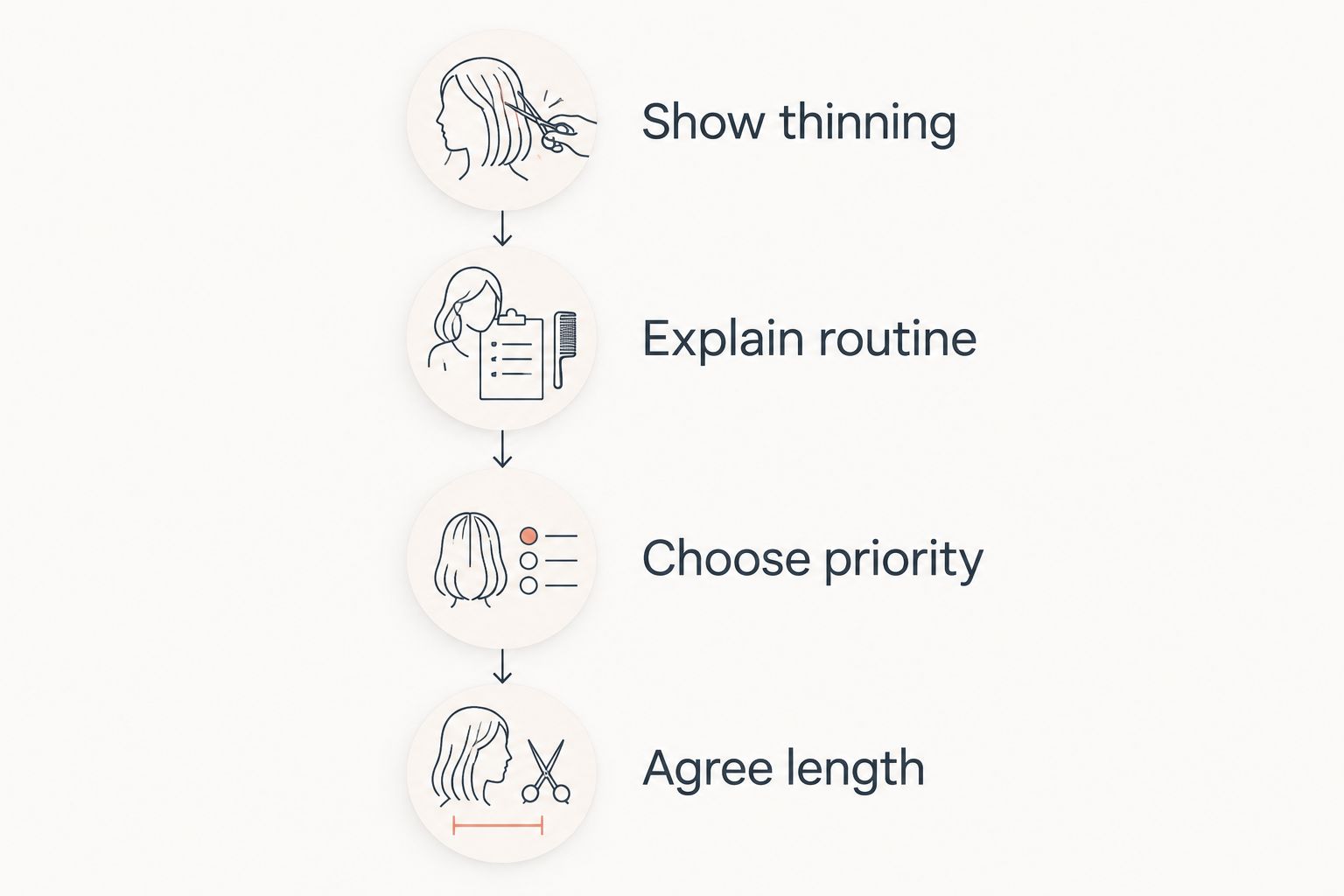
Work through these points before the haircut starts:
- Show thinning: Point out the front, crown, or wider area that concerns you. Include anything your usual styling conceals.
- Explain routine: Describe how you wash, dry, and arrange your hair on an ordinary day.
- Choose priority: Name 1 main priority, such as minimal styling, keeping movement, or a shorter outline.
- Agree length: Discuss what stays, what comes off, and how the sides relate to the top.
The consultation should connect the requested haircut to your actual hair. A style name alone does not settle those decisions.
If you also want beard grooming, say so when arranging your appointment. Discuss the haircut and beard together so your intended overall shape is clear, rather than treating the beard as an unmentioned extra.
Book your haircut appointment
Discuss your hair, routine, and preferred shape at Wavydavii in San Marcos.
How these haircuts are ranked
The 2026 ranking puts a crew cut first because it offers a shorter shape without requiring either a fringe or a defined part. The remaining choices address different preferences: forward styling, minimal effort, side direction, retained movement, or no coverage styling.
These are haircut recommendations, not treatment claims or results from a product test. Your thinning pattern and preferred routine decide which option belongs first for you.
Which haircut should you choose?
Start with a crew cut if you are undecided. Ask whether retaining a little front shape suits your hair better than going uniformly short.
Choose a textured crop only when the front supports a fringe. Keep a scissor-cut option in the conversation if you value movement, and choose a buzz cut or close shave because you prefer less hair—not because either promises to hide thinning.
FAQ
What's the best haircut for men with thinning hair in 2026?
A crew cut is a practical starting point for men who want a shorter shape without a defined part. A textured crop, buzz cut, or scissor cut fits different thinning patterns and styling preferences.
Should I cut my hair short if it's thinning?
Choose shorter hair if the shape and lower styling effort suit you. You do not have to remove all your length; selected length can still support a scissor-cut style.
Is a buzz cut better than a crew cut for thinning hair?
A buzz cut is better for minimal arranging, while a crew cut retains more shape on top. Neither conceals the scalp or restores density.
Can I keep longer hair if my hair is thinning?
Yes, you can keep length where it contributes to a workable shape. Discuss whether your hair holds that shape naturally or separates into strands you constantly reposition.
What should I tell my barber about my thinning crown?
Show your barber the crown and explain how visible it looks during normal daily wear. Discuss the crown's growth direction and surrounding length before choosing the final cut.
Does a haircut make thinning hair grow back?
No, a haircut does not regrow hair or treat hair loss. It changes length, shape, and styling; seek a qualified clinician for medical questions about hair loss.
Where can I book a personalized men's haircut in San Marcos?
Wavydavii offers men's haircuts and grooming services by appointment in San Marcos, Texas. Explain your thinning concerns and preferred routine when discussing the haircut.
One last thing
For your next 2026 appointment, bring your normal styling routine—not a carefully constructed cover-up. Explain what happens when your hair dries and what you keep adjusting during the day. The most useful haircut is one you can wear without constantly correcting it.